+44 (0)1286 676 999
LATEST NEWS
  • Mini IAQ Profile Monitor now available. Click here for more information
  • PPM Technology Ltd, working closely with the ' UK Trade and Investment ' programme to promote our products abroad. Read the case study
  • PPM Technolgy's new IAQ profile monitor featured as part of the Telegesis ZigBee case study: Read the article
  • Warning to our Chinese customers: We have reports that some unofficial distributors within the P.R.C. are suppling instruments marked as PPM-200 or PPM-300 and claiming associations with PPM Technology and that these instruments are imported from the UK. This is not the case - PPM Technology have never produced any instruments with these model names and we ask any customers who have purchased or been offered these models to please contact us.
Newsletters, and Company News
 

Newsletters


If you would like to sign up for our monthly newsletter, please contact Gareth Evans: gevans@ppm-technology.com


Company News


  • PPM to exhibit at ‘Build tight, ventilate right?’ conference

Members of PPM’s team will attend the upcoming ‘Build tight, ventilate right?’ conference to be held in Glasgow, Scotland on the 2nd of February. The conference will provide landlords, architects, housing associations, developers, policymakers and legislators with important new knowledge that is emerging from current research and practice in the UK and Europe that examines relationships between ventilation, indoor air quality and health. We hope the event will be an opportunity to gain knowledge of the latest research in IAQ and Ventilation, as well as a chance to meet relevant people in the building industry. Hopefully there will also be some interest in our instruments from the conference delegates.

  • Survey of distributors aims to give insight in international marketplace

A survey was sent to all our distributors in December; the survey aims to give us an accurate picture of the trends in the international marketplace for formaldehyde detection and other IAQ parameters. We are still waiting for replies from many of our distributors; we would appreciate timely responses if possible, as your answers will help us in formulating our strategy for 2012. * If you haven’t received the survey, and would like to complete it please contact me at - gareth@ppm-technology.com

  • France attempts to cut Indoor Air Pollution

France has published a decree setting out how the quality of indoor air should be monitored in schools. According to the decree, the methods of ventilation used in these buildings should be evaluated and certain pollutants – namely formaldehyde, benzene and carbon dioxide - measured. The decree also agrees limit values for these pollutants, which if exceeded, should trigger further investigations to try to find the source of the pollution.

  • Request for Information – Formaldehyde emitted from Power Generator

We recently received a request for information from a prospective customer regarding Formaldehyde emissions from generator insulating materials (such as certain lamination insulation varnishes or insulating paints). According to the customer - generator manufacturers have issued technical letters detailing the recommended protection measures.

  • CNN spotlight the hazards posed by poor IAQ in schools

CNN have highlighted the dire condition of some schools in the US and the health hazards posed by poor indoor air quality. The segment followed CNN’s Chief Medical Correspondent Dr. Sanjay Gupta as he visits schools in Pennsylvania, New York, and Connecticut to examine the impact of indoor air quality on students and school employees. During his travels, Dr. Gupta spoke to National Education Association (NEA) members and leaders, including National Education Association Vice President Lily Eskelsen, who called the poor condition of schools a “national crisis” and emphasized how the ability of many students to learn depends on a safe and healthy school environment.

  • USB socket now incorporated into Formaldemeter htV-m

USB interface allowing direct connection to a PC for data download or control by the SPC-3 programme without the need for additional hardware. The USB cable sends the collected data to the htv-m data download software, where the user can view past formaldehyde sampling results.

  • Hair smoothing products can release high levels of formaldehyde.

The U.S. Department of Labor's Occupational Safety and Health Administration (OSHA) issued a hazard alert on April 11, 2011 warning hair salon owners and workers about potential exposure to formaldehyde from using some hair smoothing and straightening products, including the Brazilian Blowout brand. (Formaldehyde helps bind keratin to hair, straightening it.) Responding to complaints from workers, OSHA found evidence of dangerously high levels of formaldehyde in the air of salons using these hair-straightening products — even though the products are often listed as 'formaldehyde free.' The agency also found evidence of allergic reactions by workers and clients to the products, including nosebleeds and eye irritation. Health warnings related to the treatment have been issued in many countries, some national health and safety organisations have taken a further step and have banned the product entirely.

  • Aldehydes in the hospital environment.

Both Formaldehyde and Glutaraldehyde are found in the hospital environment at higher concentrations than those to which the general population is exposed. Glutaraldehyde is used in hospitals as a disinfectant or biocide. It is a popular disinfectant for endoscopes and other instruments for which heat sterilization is not feasible, and it is used as a histological fixative and for the treatment of verrucae and warts. Formaldehyde is used in the hospital environment as a preservative of biological materials, as a fixative for tissues it is also used for embalming. Therefore concentrations of formaldehyde are often high in parts of hospitals – particularly in mortuaries and histopathology department.

  • Health groups press for more focus on indoor air.

Health advocates are urging the European Commission to take a sharper look at indoor air hazards and to strengthen regulations on chemicals found in countless household and workplace products. “It’s a very complex issue because you have a mixture of biological factors, of chemical factors, so it is difficult to say there is the one problem,” said Anne Stauffer, deputy director of the Health and Environment Alliance (HEAL), a pressure group. “But we know certainly that the quality of the outdoor environment plays a role,” she told a recent EurActiv workshop on air quality. “We also see the chemical emissions coming from consumer products that we use in the environment are of concern.” Vehicle and industrial emissions, which form particulate pollution that is blamed for thousands of deaths across the EU each year, is the biggest contributor to indoor pollution. Many countries are failing to enforce the Union’s air quality laws, a setback for both indoor and outdoor pollution.

  • Growing calls for formaldehyde to be classified as carcinogenic at European level.

France – ASNES request that formaldehyde be classified as a carcinogen at European Level.

Polish demonstrators show support for reclassification of formaldehyde.

The European Trade Union Council (ETUC) wants Europe to classify formaldehyde as carcinogenic to humans.

  • UK – China Business Lunch.

PPM Technology’s MD John B Jones attended the recent UK–China Business Lunch and SME Forum held in Cardiff City Hall. Speakers will included Secretary of State Dr. Vince Cable, Vice-Minister Gao Hucheng and Lord Green of Hurstpierpoint.

Key themes for discussion during the SME Forum included: • The outlook for UK-China SME Cooperation. • Key investment opportunities between regions in the UK and China. • China’s Green Revolution.

  • Swan Environmental promotes IAQ monitoring instruments in India

Our distributors in India – Swan Environmental have recently stepped up their campaign to promote our multiparameter IAQ instruments; established in 1987, Swan are pioneers in supplying instrumentation manufactured by various international companies to the Indian market.

(Photo) Swan Environmental

They are developing the IAQ market by continuous efforts to raise awareness of the issue, they have organized a number of seminars in many of India’s major cities and industrial sectors; the seminars were an opportunity to present their latest technology, including PPM’s instruments, and to provide hands-on training to customers. The seminars targeted industries such as Power, Cement, Steel, Oil & Gas, Refineries, Pharmaceutical and Iron. And also Government sectors like Pollution Control Boards, Universities, R & D Centers, Occupational Health Centers, etc. Each seminar attracted an average of 80 participants, approximately 2000 attended in total. Special Focus on IAQ: Swan are focused to develop the IAQ section of their business, and thus promoting PPM Technology’s products in India; the participated in VENTCONF 2011 Conference on 4th November in New Delhi, where PPM Technology posters where on display. Swan are planning to participate in more international events, including ISHRAE, held on 26th November 2011 at Hyderabad, and ACREX India 2012 (a major Exhibition of IAQ & Ventilation) 23 – 25th February 2012 in Bangalore.
  • IAQ monitoring instruments showcased at Green Middle East Exhibition 2011

Our distributors in the UAE and the Arabian Peninsula - Green Eco Global Trading recently participated in Green Middle East Exhibition held at Expo Centre, Sharjah, UAE. Green Eco displayed, promoted and demonstrated PPM’s indoor air monitoring instruments to delegates at the event. Green Eco are now part of the Global Engineering System LLC company. The exhibition promotes the environment industry in the Middle East region, featuring the technology equipment and products designed for environmental conservation and protection.

  • Taiwan set to introduce Indoor Air Quality Management Act

Taiwan’s Indoor Air Quality Management Act has passed the third reading at the Legislative Yuan. The act, which will take effect one year after promulgation by the president, stipulates that owners, managers or employers of mass gathering spaces are responsible for maintaining indoor air quality in their venues, and that those who fail to meet standards will be given a period of improvement or face fines. The air quality management act targets public areas, such as schools, medical and government organistions, financial institutions, opera houses, hotels, post offices as well as public transportation platforms. Particular air quality requirements are given to different premises depending on their size, area, and exposure. The Environmental Protection Administration (EPA) and other environmental agencies can conduct unscheduled inspections, testing for excessive levels of CO2, VOCs, formaldehyde, TVOC, bacteria, and other airborne pollutants. For large public buildings with a high flow of indoor occupants, the act stipulates for “automatic monitoring equipment” to be installed to continuously monitor the indoor air quality. The monitor data should be instantly displayed in a conspicuous location at the entrance of the building. With the legislative passing of the Indoor Air Quality Management Act, Taiwan joined South Korea and become the second nation in the world to enact a law regulating indoor air quality.

IAQ Seminar: To capitalise on is new legislation PPM’s Managing Director John B Jones will be travelling to Taiwan at the end of April to attend a IAQ seminar organised by the Taiwan Occupational Hygiene Association. Our distributors Sheng Yi weld have a booth at the exhibition; this will be a great opportunity to inform relevant Taiwanese companies and public bodies of the capabilities of our instruments in line with this new legislation.

  • Mini IAQ Profile Monitors supplied to Sciencescan
Four Mini IAQ Monitors have recently been supplied by PPM to our partners in Singapore – Sciencescan. The four units will be used by the National University of Singapore to monitor indoor air quality in their building/s. The four units where specified with different IAQ parameters -
Unit 1 - CO, CO2, TVOC PID, Temp & RH . Unit 2 – NO2, SO2 & Ozone, Temp & RH.
Unit 3 - HCHO, CO, CO2 , TOV PID & Ozone, Temp & RH.
Unit 4 - NO2 , SO2, Ammonia, Methane & Glutaraldehyde, Temp & RH.
  • EU report advocates action for healthy indoor air (IAIAQ)

A report prepared for the Directorate General for Health and Consumers as part of the EU health programme advocates further EU action and policy relating to Indoor Air Quality. The main focus of IAIAQ was assessing the public health impacts of some current European IAQ policies, and to predict the potential impacts of some alternative and future IAQ policy scenarios. IAIQ made also some attempts to assess the impacts of some EU funded IAQ data compiling projects on relevant legislation and the potential health impacts of such legislation.

  • PPM Technology at IPPS 2011

PPM Technology had a trade stand and representative at the recent International Panel Products Symposium (IPPS) held in Llandudno, North Wales.
IPPS is the leading technical conference on wood based panels, including all aspects of panel production technology, feedstocks, resins and additives, market analysis and the use of wood based panels in furniture and construction applications. Amongst the topics discussed where Formaldehyde resins. Formaldehyde is often
used in the manufacture of adhesive resin that acts as glue in the manufacture of pressed wood products.

Anyone involved in the manufacture of any of wood based panel products could be exposed to
formaldehyde. Unless due care and attention is given formaldehyde emissions can reach dangerously levels
at panel mills’ production lines. The event attracted industry delegates from around the world; many of whom where interested in formaldehyde detection and safety.

  • Visit to French distributors Equipment Scientifiques

PPM Technology recently visited the offices of our distributors in France – Equipment Scientifiques.
Equipment Scientifiques have long distributed our handheld instruments for detection of Formaldehyde and
Glutaraldehyde. In the past year or so they have also introduced our range of multi-parameter Indoor Air
Quality monitoring instruments into the French market.

During the visit John B Jones demonstrated the new features and software for our IAQ instruments; and also
discussed future plans and strategies for both companies. John also had some free time to do some sightseeing.

  • Customer Satisfaction Survey

PPM recently conducted our annual ‘Customer Satisfaction Survey’, results where generally positive. The areas covered by the survey where – Marketing, Staff and Service/Products. We always strive to improve our company’s performance in all areas. We welcome any input from our customers.
If you haven’t yet received the survey and would like to complete it please contact –
sales@ppm-technology.com

  • Formaldehyde released from wood based panels

Formaldehyde is a toxic chemical widely used to manufacture building materials and various household products. Most resin systems used in the panelboard industry are based on formaldehyde. The resins traditionally employed in the wood panel industry are those of urea formaldehyde (UF), melamine formaldehyde (MF), phenol formaldehyde and, most notably, UF resins.
Wood-based panel products can emit small amounts of formaldehyde. Each product type has a product standard governing the testing and certification of that product for formaldehyde emissions.

Particle Board and MDF - Both particleboard and MDF generally use urea formaldehyde (UF) resins,
which emit small amounts of formaldehyde.
Decorative Plywood and Composites - Decorativeplywood and veneered composites using urea
formaldehyde (UF) or melamine formaldehyderesins are used for interior applications such as panelling, cabinets or furniture.

Structural Panels - OSB and Plywood - Structural panels such as OSB and plywood using exterior type phenol formaldehyde and isocyanate resins. The amount of formaldehyde emitted from panels using phenolic-based adhesives is considered very small.
Anyone involved in the manufacture of any of these products could be exposed to formaldehyde. Unless due care and attention is given formaldehyde emissions can reach dangerously levels at panel mills production lines. Ventilation in these facilities must be good; and airborne samples of formaldehyde should be taken regularly to
ensure workers aren’t at risk of exposure to a dangerous level. Formaldehyde release is highest in newly manufactured pressed wood products, and decreases over time. Experiments have demonstrated that in a stable environment (temperature and humidity) formaldehyde release does decrease over time and the low initial values of typical particleboards and MDF will decrease by at least 50% within a few weeks of manufacture.
Formaldehyde can be released as a vapour, due to off-gassing from products containing formaldehyde based resins. Conditions of high humidity, heating or agitation (including sawing or grinding) of formaldehyde based products can lead to increased levels of formaldehyde in the air.
Workers may be exposed by breathing in the fumes from formaldehyde products as a result of off-gassing from unsealed or freshly cut surfaces and the associated dust particles.

  • Monitor Volatile Organic Compounds (VOC’s) with PPM
    Technology’s IAQ Monitor

Volatile organic compounds (VOC’s) are emitted as gases from certain solids or liquids. VOCs include a variety of chemicals, some of which may have short- and long-term adverse health effects. Concentrations of many VOCs are consistently higher indoors (up to ten times higher) than outdoors. VOC’s is one of numerous sensor options that can be incorporated into PPM Technology’s range of Indoor Air Quality monitoring instruments. The Wireless IAQ Profile Monitor can continuously monitor up to 7 customer specified parameters (including VOC’s).

Sources - Household products including: paints, paint strippers, and other solvents; wood preservatives; aerosol sprays; cleansers and disinfectants; air fresheners; stored fuels and automotive products
Health effects - Eye, nose, and throat irritation; headaches, loss of coordination, nausea; damage to
liver, kidney, and central nervous system. Some organics can cause cancer in animals; some are suspected
or known to cause cancer in humans.

Industries - In offices, VOC results from new furnishings, wall coverings, and office equipment such as photocopy machines, which can off-gas VOCs into the air.
Guidelines and Legislation - In most countries, a separate definition of VOCs is used with regard to indoor air quality that comprises each organic chemical compound that can be measured as follows: Adsorption from air on Tenax TA, thermal desorption, gas chromatographic separation over a 100% non polar column (dimethylpolysiloxane). VOC (volatile organic compounds) are all compounds that appear in the gas
chromatogram between and including n-hexane and n-hexadecane.
Sensor - Range ca. 0-20ppm, Resolution 0.01ppm, Response time: 60s

  • PPM Technology celebrates 12th birthday

PPM Technology recently celebrated its 12th birthday. We are very grateful to all distributors,
customers and other associates who have been integral in contributing throughout the company’s existence.

The name PPM has been associated for many years with toxic gas detection technology ever since Dr Tom Parry Jones OBE established PPM LTD in 1993. Previously, Dr. Jones was the founding owner of Lion Laboratories , a world leader in breath alcohol detection technology, which was sold in 1991 to MPD Inc. of Owensboro, Kentucky.
In 1999 - when Dr. Jones decided to step down - the company was bought by three employees and re-named to become PPM Technology Ltd. Since the management buy-out the success has continued with increased sales, expanded product ranges and almost quadrupling the number of staff employed. This expansion has
necessitated relocation to new premises on the Cibyn Industrial Estate in Caernarfon. Today, the company is an established manufacturer and supplier of portable and fixed gas detection instruments based on electrochemical sensing technology. Supported by a network of experienced distributors, PPM's products are exported to over thirty countries in five continents, with a wide range of industries and health care establishments worldwide relying on PPM gas detection instruments for continued protection against airborne hazards in the workplace.

  • Formacare conducts studies to evaluate effect of Formaldehyde has on humans


Formacare is a consortium of European formaldehyde producers; over the past few years they have commissioned a number of studies to evaluate the effect formaldehyde has on humans, with a specific focus on carcinogenicity. The past year has seen a number of studies looking at the genotoxity, mutagenicity and aneugenicity of formaldehyde.

Formacare have also been meeting with various government agencies; discussing Formaldehyde legislation and re-classification. This is part of a ‘Regulatory Roadshow’ organsied by Formacare, they will be meeting with many relevant government authorities across Europe. Our distributors Tennants Distribution Ltd participate in
Formacare group through their chemical manufacturing company Synthite Ltd.

  • Internship period comes to an end

PPM Technology’s summer intern Chris Roberts has now left us to complete his University degree, during his time here Chris updated all our instrument manuals; ensuring they are all now inline with the latest software updates and new product features.
His role during the placement was Quality Assurance Administrator. Hinds International of Hong Kong also took on 2 interns over the past few months; they looked into market possibilities and trends within the heating ventilation and air conditioning (HVAC) industry, and will attempted to interpret and diagnose IAQ profiles.

  • Air Quality in Indoor Pools story featured on CNN.com

Concerns over air quality in indoor swimming pools has recently received significant international exposure; an item relating to this was featured on CNN.com. “Indoor pools create an additional danger because of the
enclosed atmosphere. Volatile chemicals from the water are transferred, often via vigorous activity like a swim team's kicks, to the air. Without a proper ventilation system, the chemicals can hang around to be inhaled by coaches, lifeguards or spectators.”

Our Wireless IAQ Profile Monitor system has been supplied to a number of indoor swimming pool environments; the units contained sensors for Temperature, Humidity, Chlorine, Ammonia, Carbon Dioxide and Carbon Monoxide.
As awareness of the issue increase, we are confident there will be further interest in our instruments. We are working on this project with our long-standing distributors Tennants Distribution Ltd; they specialise in chemicals and testing kits used in swimming pools; with their expertise in the field we are confident there will be considerable opportunities for the product in this environment.

  • Industrial facilities can be vulnerable to numerous hazardous or toxic gases

Industrial workplaces are likely to come across one or more hazardous or toxic gases. Combustible gases such as methane are highly dangerous because they can cause large and fatal explosions when ignited.
Other problem areas when working in industry can include carbon monoxide (which poisons the cardiovascular system), oxygen deficiency, and elevated levels of other gases and pollutants, depending and the processes in the facility, may include ammonia, sulphur dioxide, nitrogen dioxide and ozone.
PPM Technology's fixed multi-parameter gas detection systems can monitor the levels of harmful gases in the area and alert employees when they need to get out or when systems and processes need to be shut down, the system can also activate HVAC systems when required.

  • PPMonitor Software shows effect Air-Conditioning system has on Temperature and Humidity levels

Monitoring Temperature and Humidity levels can ensure the comfort of building occupants; it can also offer financial and environmental benefits due to savings in energy usage.
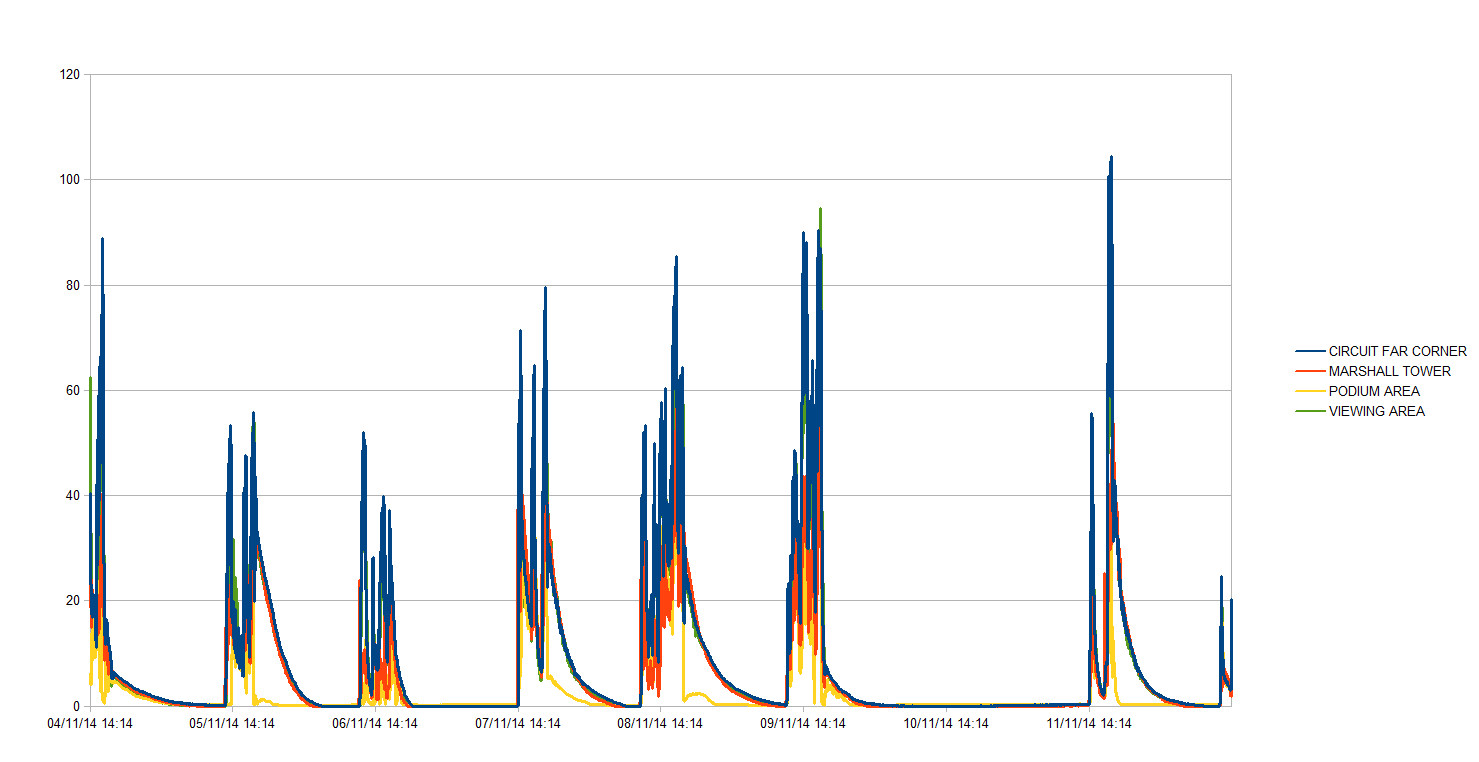
Many parts of the world experience extremes in temperature and humidity; therefore to ensure an ambient indoor environment Air-Con systems are installed. PPM Technology can recreate these conditions in our Laboratory Chamber. The below graph (Figure 1) (taken from PPMonitor software) shows how temperature and humidity have opposite yet equal effects in an air-conditioned building. The second graph (Figure 2) shows the cyclic nature of air-conditioning system (air is being heated and then cooled constantly in order to maintain temperature to within certain criteria.)

Carbon Dioxide is a good indicator of how adequate the ventilation system is within a
building. The results gathered by the IAQ Monitor’s CO2 sensor (Figure 3), coupled with Temperature and Humidity readings will give an indication of the effectiveness of the airconditioning
system in the building. The air conditioning system can be tied-in with the IAQ Monitor; so the Air-Con is not used
when CO2 levels are low and fresh air is not required in the room.

  • Suzhou Stanford supplies multiple Formaldemeter 400ST for
    environmental quality test at ‘Universiade 2011’.

Suzhou Stanford, one of our distributors in China have supported a company in the bidding for an environmental quality test in Shenzen, Guandong Province, where the ‘Universiade 2011’ games are currently
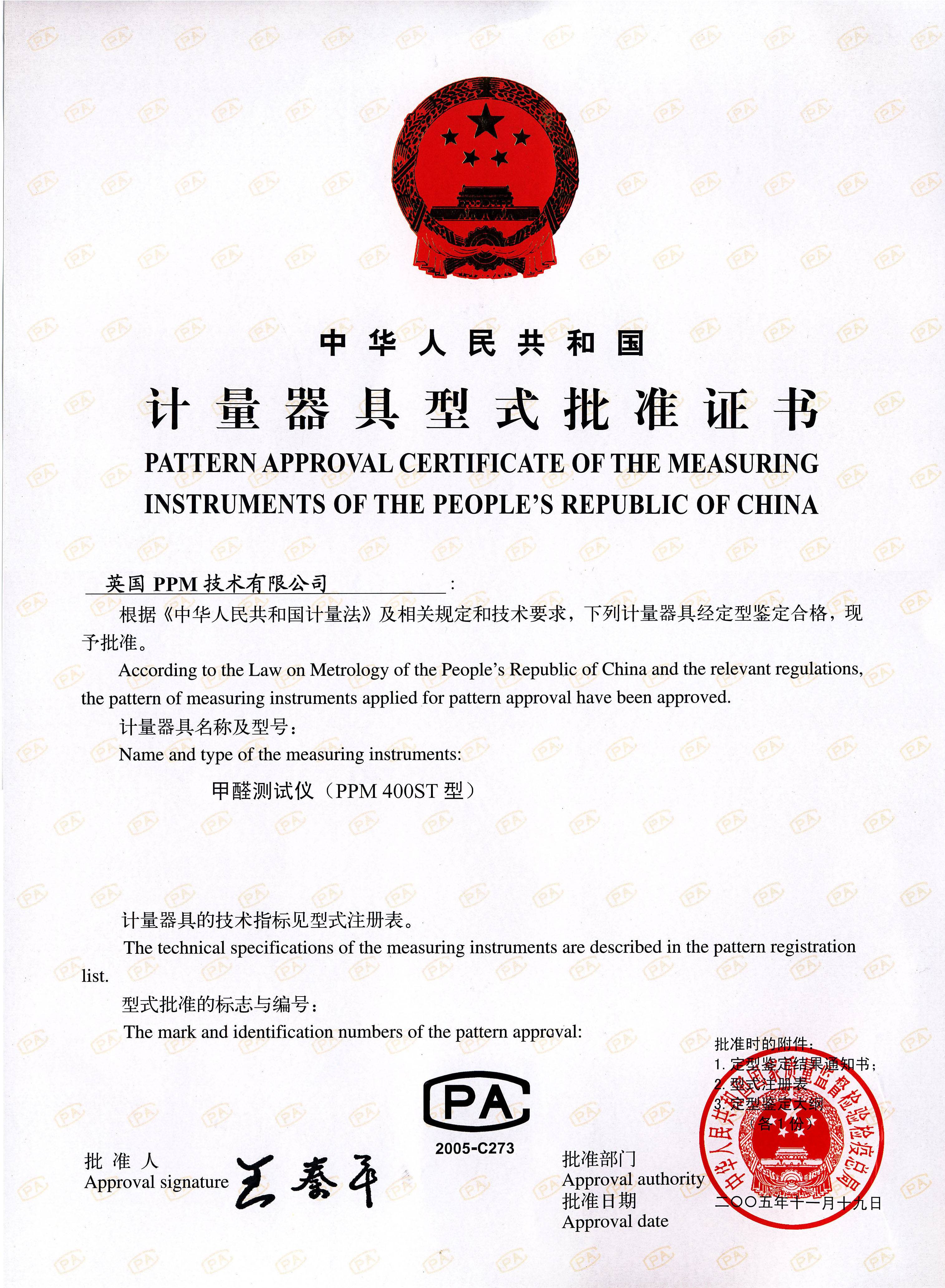
being held. Multiple Formaldemeter 400ST units were supplied to examine IAQ in all rooms, venues and facilities of the event. The Universiade is an international multi-sport event, organized for university athletes, it is also known as the World Student Games. The PPM 400ST is exclusive to our distributor Suzhou Stanford Instruments Ltd in the P.R. China and has also been awarded a P.A. Certificate. (Pattern Approval Certificate

  • Dr Ken Wai delivers presentation on ‘Air Quality of Old Folks
    Homes’.

Dr Ken Wai of Hinds International recently held a presentation discussing ‘Air Quality in Old Folks Homes’. The presentation is part of the IAQ Lecture Series held by Dr Wai. Over the past 30 months Dr Wai has delivered a series of talks relating to Indoor Air Quality (IAQ) to various academic, professional, commercial & government bodies.
The latest presentation included Dr Wai’s recommended guidelines for air quality parameters in business places and also specific guidelines for old peoples homes in Hong Kong. The presentation also outlines our IAQ objectives and the benefits offered by the IAQ Profile Monitoring System.

  • Successful financial year for PPM.

PPM Technology is nearing end of its 12th financial year. This year’s turnover figure is very
encouraging; we expect this to be the second best year in regards to turnover for PPM.

We are very grateful to all distributors, customers and other associates who have been integral in contributing to this successful year. We will continue our policy of continuous development and investing in developing new
products and services. The majority of profit made will be re-invested back into the company for research and development.

  • Embalmers can be exposed to dangerous levels of
    Formaldehyde.

Embalmers are at risk of experiencing health effects from the chemical formaldehyde. It is present as a dissolved gas, in concentrations from 37% to 54%, in the water-based solution called formalin. Formalin is used during the embalming processes as a disinfectant and preservative. It is also commonly used as an injection fluid in arterial and cavity embalming, and in surface embalming as a fluid for soaking surface packs or a gel applied to the skin or internal surfaces. Paraformaldehyde, a powdered polymer form of formaldehyde, is
also sometimes used in embalming processes. A report prepared by the National Industrial Chemicals Notification and Assessment Scheme (NICNAS) for the Australian Department of Health and Ageing found
Formaldehyde levels during embalming can be very high, up to 4 parts per million (ppm), with average levels greater than 0.5 ppm. The level of 0.5 ppm is the level at which humans are known to start experiencing discomfort, however we feel anything above the level of 0.1ppm can cause discomfort.

Report

The US Health and Human Services (HHS) recently listed formaldehyde as a carcinogen. It has been found that exposure to small concentrations of formaldehyde can irritate the eyes and mucus membranes, resulting in watery eyes, headache, a burning sensation in the throat, and difficulty breathing. Large exposures of
formaldehyde are converted to formic acid in the body, leading to a rise in blood acidity, rapid-shallow breathing, hypothermia, and coma or death.
In order to ensure embalmers and other employees are not exposed to dangerous levels of Formaldehyde in the air, it is advised to detect and monitor levels using a suitable detection instrument, such as the Formaldemeter htv-m.

  • Dangerous chemicals can pollute the air in indoor swimming
    pools.

Swimming pools (and swimming pool plant rooms) can release all sorts of harmful gases into the poolside environment and accidents happen all too often. This Wireless Monitoring system will continuously detect and record the following parameters: Carbon Dioxide - Carbon Monoxide - Chlorine - Ammonia - Temperature &
Relative Humidity.
Chlorine products are used in swimming pools to prevent growth and spread of bacteria and viruses. Nitrogen pollution produced from organic derivatives. (sweat, urine) The combination of the Cl2 & N2 containing compounds reacting together can produce Trichloramine (NCl3). NCl3 can produce the same effect as Tear gas and can be found in dangerous levels in indoor pools.This can lead to Recreational Water Illness (RWI) -

News Item

Readings are streamed wirelessly to a PC for 24hr 7/7 real-time display and information data storage. Maximum high and low level alarms can be set for each parameter, which will show an alert on screen (& sound an audible alarm - supplied extra) if the levels are reached or exceeded.

  • Mini IAQ Profile Monitors supplied for ice rink air quality
    monitoring.

PPM have recently supplied a number of Mini IAQ Profile Monitor to Joel Anderson of Precision Quality Consulting in a project to monitor air quality in a indoor ice rink; the aim being to provide a safe environment for users and employees of icearenas.
Indoor Air Quality (IAQ) is a significant concern in ice rinks and arenas; these facilities are especially vulnerable to the affect of an unhealthy indoor environment as fuel-burning equipment such as ice resurfaces are used indoors.
The parameters commonly monitored in ice rinks/arenas are temperature, relative humidity and also carbon monoxide and nitrogen dioxide. The monitoring unit is installed in the ice rinks 'scorer’s box'; the monitor continuously receives air samples from the rink, readings are transmitted in real-time to the office computer
which stores the readings on easily read graphs. Multiple alarm levels are available to activate exhaust fans, dehumidification systems, or signal an auto dialer. Energy savings can be achieved by operating the
exhaust system more efficiently.
The Mini IAQ Monitor is now recognized by the Minnesota Health Department, as an instrument suitable for monitoring air quality in this environment.

  • Gov't lacks legislation to prevent ‘Sick Building Syndrome'

20 of 63 employees in a three-story building in Nazareth, Israel have become very sick in recent years, some suffering from cancer. After hearing about a number of cases in which government workers have become
seriously ill due to their building environments, the Knesset Environment and Health Committee held a hearing about “Sick Building Syndrome” (SBS) and the lack of legislation regarding this subject in Israel.

News Item

  • PPM Technology ‘Go Green'

PPM has formed a new ‘Environmental Policy’ for the company. Signed by all staff members, the policy’s aim is to reduce our environmental impact in order to achieve a balance which addresses the needs of business along with responsibilities required to operate to an Environmental Management System. Progress will be reviewed
annually.
The main focus of the policy is to reduce waste, save energy and to be more resourceful and efficient in our office and packaging procedure.
The full Environmental Policy is attached to the newsletter email, and will also be available on our website soon.

  • ‘Remote monitoring’ feature to be added to Touch Screen IAQ
    Monitor

PPM is working with a UK based company in a project which will see number additional features available for
the Touch Screen IAQ Monitor. One feature will be ‘Remote monitoring’, the user will
be able to view the data and control monitoring in realtime on a PC/Laptop from any location. Various modes of
communication are possible including Wifi, GSM, Ethernet, USB and Zigbee.
This feature allows the user to set up text-message alerts when the instrument detects an overexposure; the necessary personnel or authorities will be notified of the danger immediately. When overexposure occurs the software can also automatically trigger and control 3rd party relays such as building alarms or HVAC systems.
Real-time two-way communication can be achieved using remote monitoring. The remote ‘supervisor’ can send a question or command. This can, for example, be used as a prompt to ensure the unit has been calibrated - ‘Unit Calibrated?’ Can be sent remotely and displayed instantaneously on the instrument’s panel, the receiver can reply ‘Yes/No’ by pressing the necessary command on the touch screen. We anticipate many safety related applications for this feature.
A GPS option will also become available; meaning the location of each unit can be tracked and monitored remotely.

  • Mini IAQ Profile Monitors to be installed at
    European HQ

Three Mini IAQ Profile Monitor units have been supplied to Google’s European Headquarters based in Dublin. Google are keen to ensure the comfort, health and wellbeing of their employees. The monitoring units will contain sensors for 3 parameters - temperature, humidity and carbon dioxide.
We would like to offer our appreciation to Stephanie McCullough and Catherine McQuaid from ARAMARK Ireland who were instrumental during the project. We hope this will be the first of many IAQ monitoring systems to be installed in Google’s numerous office buildings worldwide.

  • PPM @ UK Wireless Fortronic Technology forum.

PPM’s Roger Jones attended the recent Fortronic technical forum specifically dedicated to wireless
technology, which took place on the 28th June 2011 at the Williams F1 Conference Centre near Oxford. The
programme of events included technical presentations by some respected individuals and leading companies in the field of wireless technology.
The forum was beneficial as it informed PPM of the latest technology and developments in this field.

  • PPM welcomes colleagues from Hinds International

Dennis Wong, Benjamin Wai and Rebecca Wong from Hinds International recently visited PPM Technology’s HQ in Caernarfon. Constructive meetings were held regarding new and ongoing projects in which PPM and Hinds will co-operate closely. The meeting was also an opportunity to discuss the progress, future aims and responsibilities of the interns currently employed concurrently by PPM and Hinds.

  • France adopts new method for measuring indoor air quality

The French National Agency for Food Safety, Environment and Labour (ANSES) has adopted changes to its method of developing indoor air guideline values (IAGVs). ANSES has updated its list of priority substances for indoor environments based on the new guidelines. Including for
Formaldehyde -

Short Term exposure level for formaldehyde (2 hours ) - 50 ppm.
Long Term exposure for formaldehyde (1 day) - 10 ppm

Full Report

  • ‘Value Engineering’ cuts manufacturing costs

Our recent value engineering exercise was highly successful in significantly cutting manufacturing costs for our instruments. By sourcing new suppliers and components we have reduced production cost for our 3 parameter Mini IAQ Profile Monitor instrument for Temperature, Humidity and Carbon Dioxide, they are now very competitively priced; we predict there is a significant market for these parameters.

Please contact info@ppm-technology.com for details.

  • Indoor Environmental Quality and LEED Construction

As the awareness of the need for green commercial and residential construction has grown, so has the necessity for a certification system that rates how well a structure is built or remodeled. For this reason, the US Green Building Council developed the LEED certification system that measures the level of green building practices that have been implemented in the construction process. LEED stands for Leadership in Energy
and Environmental Design.

LEED certification covers the broad spectrum of green building practices. Whether it is water efficiency, energy reduction, lower carbon emissions, minimized construction waste, or indoor air quality improvement. Indoor Environmental Quality is one aspect that must be addressed to achieve LEED certification; as construction becomes tighter and building more insulated, the need for proper moisture and air contaminant control becomes paramount. This category is designed to ensure a safe interior environment
Green Building Council Website

  • Formaldehyde report release was delayed by four years

The US government has added formaldehyde to a list of known carcinogens. The report prepared for the Secretary of the Department of Health and Human Services (HHS), contained warnings from scientists that people with higher exposure to formaldehyde were more at risk for nasopharyngeal cancer, myeloid leukemia and other cancers.
However it has emerged the he study's release was delayed for four years. The yearslong delay in the release of the report was the result of lobbying of the Obama and Bush administrations and Congress by the chemical industry. The president of the American Chemistry Council is a former member of Congress.
News report

  • Phenol filters prove very effective in filtering out interference

PPM Technology have recently conducted an experiment which identified interference factors that can affect Formaldehyde sensor readings.
Interference factors differ from sensor to sensor, and with each sensor’s use over it's lifetime. This table below is a guideline. It is important that you do not attempt to calibrate with cross-interfering gases.
Ozone causes formaldehyde to be broken down into carbon dioxide, water and oxygen; therefore, in ozone rich environments, formaldehyde levels can be reduced. Phenol Filters are extremely efficient at removing phenol from the sample, along with some other alcohols and aldehydes. Note that Phenol Filters reduce the concentration of formaldehyde by around 15% so should only be used in conditions where there are suspected interferences and the instrument should be calibrated with the Phenol Filter in place.

  • U.S. adds formaldehyde to list of carcinogens

The US government has added formaldehyde to a list of known carcinogens. The report prepared for the Secretary of the Department of Health and Human Services (HHS), contained warnings from scientists that people with higher exposure to formaldehyde were more at risk for nasopharyngeal cancer, myeloid leukemia and other cancers.
"There is now sufficient evidence from studies in humans to show that individuals with higher measures of exposure to formaldehyde are at increased risk for certain types of rare cancers" the Report on Carcinogens said.
News report

  • IAQ Lecture Series

Over the past 30 months Dr Ken Wai of Hinds International has delivered a series of talks relating to Indoor Air Quality (IAQ) to various academic, professional, commercial & government bodies, topics discussed are listed below: -


I. Scientific and Systematic Management of IAQ (for Building Service
professionals).
II. The Importance of a standard for IAQ.
III. In harmony with nature.
IV. Building Management of the 21st Century.
V. Give meaning to IAQ management.
VI. Introduction to the Hinds IAQ Profile Monitoring System.
VII. Automatic IAQ Profile monitoring systems.
VIII. Automatic and continuous monitoring of IAQ.
IX. Problem solving in IAQ Management.

The last two of the above lectures were delivered last week in a seminar specifically for the front line workers in the Electrical & Mechanical Service Department of the HKSAR Government. It is hoped these lectures will raise awareness of IAQ issues and ensure professionals are aware of the benefits offered by a continuous monitoring system.

  • OSHA releases a new IAQ guidance document for commercial
    and institutional buildings

The US Occupational Safety and Health Administration (OSHA) have just released the “Indoor Air Quality in Commercial and Institutional Buildings” booklet.
This guidance document provides practical recommendations that aim to prevent or minimize IAQ problems in commercial and institutional buildings, and help resolve such problems quickly if they do arise. The document provides flexible guidance to employers to help them keep their buildings free of pollutants and conditions that lead to poor IAQ. It also provides information on good IAQ management, including control of airborne pollutants, introduction and distribution of adequate make-up air, and maintenance of an acceptable temperature and humidity.
Full Booklet

  • Climate Change, the Indoor Environment and Health

The Institute of Medicine report warns that the effort to counter climate change has spurred a shift to untested new materials and building retrofits that could limit and alter the air flow inside buildings. The report says this may concentrate indoor pollutants.
"America is in the midst of a large experiment in which weatherization efforts, retrofits, and other initiatives that affect air exchange between the indoor and outdoor environments are taking place and new building materials and consumer products are being introduced indoors with relatively little consideration as to how they might affect the health of occupants," said a statement from John Spengler, the chairman of the committee that wrote the report.

News item

Full report

  • PPM and Hinds welcome new interns

PPM Technology have taken on an intern for a period of 10 weeks as part of the Go Wales Placement scheme. Chris Roberts is a Medical Sciences undergraduate student at the University of Glamorgan, his role during the placement is Quality Assurance Administrator, and he will initially be looking at our documentation and manuals to ensure all information is correct and up-to-date. Hinds International of Hong Kong are also taking on 2 interns in the coming months; they will look at market possibilities and trends within the heating ventilation and air conditioning (HVAC) industry, and will also seek to interpret and diagnose IAQ profiles.

  • PPM to initiate internal environmental standards

We will begin a drive to become more environmentally friendly in our procedures and actions. Members of the PPM team will have responsibility for their actions in an attempt to reduce wastage. We will also regularly monitor energy use, we aim to reduce our energy consumption by following simple environmental procedures such as
switching electrical equipment off when not in use and only using equipment when necessary.

  • New partnership with Swan Environmental Ltd

PPM Technology is delighted to announce a new distribution partnership with Swan Environmental Ltd of India. They will initially distribute our Formaldehyde detection instruments for IAQ and fumigation residuals detection. We are also hopeful of a future market for our multi-parameter IAQ instruments in India. Swan Environmental Ltd was established in 1987, they are pioneers in supplying instrumentation manufactured by various international companies to the Indian market. They have vast experience in the field of Environmental Health, Safety and Security Products and have supplied many instruments to government organisations, institutions and industries all over India. They are developing the IAQ market by continuous efforts to raise awareness of the issue, which has brought in many enquiries in regards to monitoring IAQ parameters. Swan have a set up to cover all of India, having their head office at Hyderabad and branches at New Delhi, Mumbai, Chennai, Kolkata and many sub branches at various other Indian cities.
We have high hopes that this co-operation will see an increase in interest and demand in our instruments in India and the partnership will prove to be mutually beneficial for both parties.

  • Exciting new project with a major multi-national company

A representative from PPM recently visited the European Headquarters of a major multi-national IT company. Successful meetings where held to discuss a project for monitoring IAQ in their numerous office buildings worldwide. Although in many of the countries in which the offices are located no official guidelines or legislation exist; the company are keen to ensure the comfort, health and well being of their employees. Initially the monitoring units would contain sensors for 3 parameters - temperature, humidity and carbon dioxide.
In countries where IAQ guidelines are in place the units would include sensors for the parameters covered by these guidelines, such as formaldehyde and TVOC’s.
Following the meeting, PPM will soon be installing a number of units for a 2 week trial period at the headquarters, we are confident that all will go well, as the project would be very significant for PPM Technology.

  • Value engineering will cut manufacturing costs

PPM has in the past few months undertaken a value engineering exercise to drive down the manufacturing costs for our range of multi-parameter IAQ monitoring instruments.
We have designed our own boards for the instruments, this should significantly reduce the manufacturing costs, and in turn reduce the purchasing price for distributors and customers. The new boards are currently being tested, they will especially improve performance for the 4-20 milliamp sensors, including CO, NO2 and SO2.PPM has a policy of continuously improving our products and developing new products. We also see great benefit in always asking customers/distributors for their specific requirements for sensors and the instruments.

  • New Ozone sensors sourced

We have now sourced a new Ozone sensor for our IAQ Monitoring instruments. Our previous sensors supplied by City Technology would frequently ‘dry-out’ therefore its lifespan was not of a satisfactory length of time. We would like to apologize to customers who have experienced problems due to this.
We are currently testing the newly sourced sensors. We find their performance are much better as they are easier to calibrate, offer long-term stability and have a lifespan up to 2-3 times longer. They will have the added benefit of being cheaper, because we will be able to use our own boards.

  • Wireless units supplied to Tennants for monitoring the air in
    indoor swimming pools

Our Wireless IAQ Profile Monitor system is currently being demonstrated in an indoor swimming pool environment; the units contained sensors for Temperature, Humidity, Chlorine, Ammonia, Carbon Dioxide and Carbon Monoxide.

Chlorine products are used in swimming pools to prevent growth and spread of bacteria and viruses. Nitrogen pollution is produced from organic derivatives. (sweat, urine) The combination of the Cl2 & N2 containing compounds reacting together can produce Trichloramine (NCl3). NCl3 can produce the same effect as Tear gas and is found in dangerous levels in indoor pools. The instruments took longer than we had hope to build and dispatch, for which we apologise, however we are confident this is the first of many instruments we will supply for the indoor pool market.
Tennants specialise in chemicals and testing kits used in swimming pools; with their expertise in the field we are confident there will be considerable opportunities for the product in this environment.

  • Event aims to attract Japanese businesses to Wales

John B Jones recently attended a dinner hosted by the Welsh Assembly government, the dinner aimed to attract Japanese companies to relocate their manufacturing sites to Wales. Many companies where affected by the recent natural disaster in Japan, which has resulted in problems in supplying parts worldwide. The First Minister of Wales, Carwyn Jones attended the event, his Welsh Labour Party have been returned to power at recent elections. We are hoping this government will bring opportunities for small business in Wales, particularly companies who rely heavily on the international market.

  • Carbon Monoxide emitted indoors from vehicles must be
    monitored

Many facilities are vulnerable to the effects of an unhealthy indoor environment when fuel-burning vehicles are used indoors. Placing an IAQ monitoring system in buildings and facilities enables immediate identification of IAQ problems, the sources and causes of any problem can be eliminated before symptoms become evident.
PPM Technology’s IAQ monitoring instruments are frequently used to monitor dangerous levels of Carbon Monoxide and Nitrogen Dioxide in indoor ice rinks and arena’s. These facilities are vulnerable to these pollutants equipment such as the ice-resurfacing vehicle are used indoors.

Our technology is also suitable for use in any other buildings where fuel-burning vehicles and machinery emit Carbon Monoxide and other harmful pollutants. For example in buildings where forklift trucks are present, indoor parking areas and any other facilities where vehicles are used indoors. Other sources of Carbon Monoxide include from improperly vented furnaces, malfunctioning gas ranges and poorly maintained combustion devices (e.g. boilers, furnaces). Any building, which uses machinery, equipment or vehicles that emits carbon monoxide or nitrogen dioxide into the indoor environment should have a proper monitoring system in place. Carbon Monoxide, known as the silent killer is extremely dangerous as it cannot be seen or smelt. Therefore it needs to be regulated and monitored, it is also imperative that there is adequate ventilation within the area where the vehicle will be operated.

  • PPM Technology at MCERT's 2011

With emissions monitoring as the central theme, the recent MCERTS 2011 event proved extremely successful for PPM Technology. Chemist Laura Roberts reported a high level of participation in the company's workshop
'Continuous Air Monitoring for Indoor Environments'. Some promising contacts were made; many delegates were interested in the Touch Screen IAQ Monitor.

  • Documentary follows PPM in Hong Kong

PPM Technology was recently featured in a TV documentary. ‘O Gymru fach’ was shown on Welsh Language channel S4C, the program highlights companies from Wales who have had an impact on the international market. The show followed John B Jones to Hong Kong for the Eco Expo exhibition held last November. The program also visited the office of Science International Corp where our IAQ instruments were being tested.

  • IAQ monitoring instrument’s showcased at MIECF 2011

Our partners Hinds International have recently returned from showcasing our IAQ Monitoring instruments at the MIECF exhibition in Macao. Our instruments were showcased to "green" industry professionals and decision makers across the region. Representing PPM at MIECF were Dr Ken Wai, Dr Denis Wong and WK Wong of Hinds International.

  • New driver for htV-m

A new driver (v2.8.14) has been released for the RS232 to USB adaptors supplied with the htV-m for use by the htV-m Download Software. An installer for the new driver can be obtained directly from the developer here.

  • Calls for improvements to EPA’s draft health assessment for formaldehyde

A U.S. Environmental Protection Agency draft assessment of the potential health effects of formaldehyde exposure needs substantial revision, says a new report from the National Research Council. They claim the draft assessment has not adequately supported its conclusions that formaldehyde causes other cancers of the respiratory tract, leukaemia, or several other non-cancer health outcomes. Read More

  • Portuguese guidelines set maximum permissible concentrations for IAQ
    parameters

Government body ‘Certficacao Energetica e Ar Interior EDIFICIOS’ (National Energy and Indoor Air Quality Certification) have introduced the guideline to ensure building occupants are not exposed to dangerous concentrations of gases and compounds such as Formaldehyde, Ozone, TVOC’s, Carbon Dioxide and Carbon Monoxide.

  • New guideline identifies interactions affecting indoor environmental quality

The American Society for Heating Refrigeration and Air-Conditioning (ASHRAE) have recently published new guidelines relating to the interactions affecting Indoor Environmental Quality, the guidelines provides guidance on achieving good indoor environments by considering the interactions of air quality and thermal conditions, as
well as lighting and acoustics - Read More

  • Dangerous levels of Formaldehyde found in hair styling treatment

A popular hair smoothing treatment called Brazilian Blowout can release unsafe levels of the chemical formaldehyde, posing a risk to hair salon workers and their customers. Many national health
and safety organizations, including in Canada, USA and France, have condemned the treatment. Read more

  • New ‘Touch Screen’ IAQ Monitor to be unveiled at MCERT's 2011

Our new ‘Touch Screen’ IAQ Monitor will be launched at the MCERTs 2011 event. We are confident there will be
demand for the new version of the instrument, and have already received a number of inquiries. The 3.5” touch screen panel display’s current sensor readings in real time. The user is able to navigate through the various
sensors simply by touching the panel. The unit includes a built in USB port for downloading data quickly and easily.
Configurable with up to 8 parameter sensors, the new IAQ profile monitor is a welcome addition to PPM Technology range of indoor air quality monitors.

PPM Technology are also preparing to host a workshop at MCERTS, the 2 day exhibition is held on the 30th and 31st of March in Telford, England. The workshop will have the title “Continuous Air Monitoring for Indoor Environments”; our IAQ Monitoring system will be introduced to delegates; and we will demonstrate the advantages and applications offered by a continuous monitor of the indoor environment. The workshop will be held at 9:45 on Wednesday the 30th.

MCERTS Exhibition

  • PPM IAQ Monitors to be showcased at MIECF 2011

PPM Technology are looking forward to showcasing our instruments at the European Pavilion of the upcoming Macao (SAR of China) International Environmental Co-operation Forum (MIECF), held on the 31st March to the 2nd April at the Venetian Macao Resort Hotel.

Our instruments will be showcased to "green" industry professionals and decision makers across the region. Representing PPM at MIECF will be Dr Ken Wai and Peter Williamson of Hinds International.

MIECF Exhibition

  • PPM host visitor from Hinds International

Dr Denis Wong of Hinds International visited PPM Technology HQ in Caernarfon recently. PPM Technology has worked closely with Hinds over the past few years. Our partnership has seen a growing demand for our IAQ monitors in Hong Kong.
Hong Kong and China has long been an important market for PPM Technology's products. The Hong Kong government were one of the first governments worldwide to introduce guidelines on Indoor air quality, PPM hope these guidelines will become legislation very soon. Close co-operation with our Hinds International has seen growing interest in our IAQ instruments.

  • IAQ Monitors enables a more effective air-conditioning system

The most accurate way to monitor a building's Indoor Air Quality is by continuously monitoring a number of parameters that contribute to a building's indoor air quality. PPM Technology's Wireless IAQ Profile Monitor system can continuously detect, measure and record a number of customer specified parameters, including Temperature, Humidity, Nitrogen Dioxide, Carbon Monoxide, Carbon Dioxide, Sulphur Dioxide, Ozone, Ammonia, Formaldehyde, Chlorine, Glutaraldehyde, Methane, TVOC’s and Smoke.

The wireless system can integrate with the building automation system through the dedicated software, which allows an entire wireless network of IAQ monitoring units to be managed and controlled from a single PC. The software can set parameters for temperature, humidity, and concentrations of hazardous gases, which can then activate and control the air-conditioning and ventilation systems. It can also turn heating on and off, and as a last resort trigger building alarms.


The fact that the monitoring system can connect and control third-party systems such as an air-conditioning unit can ensure a more effective airconditioning or ventilation system; this would also have a positive impact on
the environment. It would make sure human comfort, energy conservation, cost effectiveness, and health of the occupants inside the building is ensured. To ensure the preset targets of air quality are met, but not over- or underprovided, signals from real-time monitoring to control the air-conditioning and
ventilation systems are used. It can help avoid energy and resource waste due to better control of the air conditioning system.


To dilute the indoor air pollutants, a good ventilation system must be in place. An over-ventilated air-conditioned building is not energy-efficient. It is a difficult balance to save money and energy, yet maintain a comfortable and
healthy environment. Therefore, the logical solution to controlling indoor air pollution is good ventilation coupled with IAQ monitoring using sensors. Equipping a building with an IAQ monitoring system can provide building
service professionals and facility managers with the data they need for effective air quality management within the building.

  • New software update for Formaldemeter htv-m

The new v1.0r20 release of the PPM Technology htV-m Download Software is now available Here.

Alternatively press the “Check for Updates” button on the software start-up screen. The updates are mainly fixes to bugs or problems,which have been identified by the PPM team or have been reported by the software’s users. PPM is continuously updating our software to improve the performance and usability.

  • PPM IAQ Monitors to be showcased at MIECF 2011

PPM Technology will have a booth at the European Pavilion of the upcoming Macao (SAR of China) International Environmental Co-operation Forum (MIECF), to held on the 31st March to the 2nd April at the Venetian Macao Resort Hotel. MIECF is a high-powered annual platform to promote solutions for a low carbon future, and
sustainable urban development in South China.
Our instruments will be showcased to "green" industry professionals and decision makers across the region. Representing PPM at MIECF will be Dr Ken Wai and Peter Williamson of Hinds International.

  • Carbon Monoxide poisoning threat in Ice Rinks receives
    national TV exposure in the US

The issue of Carbon Monoxide problems in ice rinks has received national television exposure in the US, ‘The Today Show’ on MSNBC recently broadcast an investigation into the threat of Carbon Monoxide poisoning in ice rinks.
Carbon Monoxide levels can reach dangerous levels in these environments as the pollutant is released by the ‘ice resurfacing vehicle’ or ‘ice edger’. PPM and our partner in the United States, Joel Anderson of Precision Quality Consulting have supplied a number of Mini IAQ Profile Monitor units to various ice rinks/arenas with the aim of providing a safe environment for users and employees of ice arenas. As knowledge and concerns of this issue grow, we expect to see greater demand and interest in our instruments in these environments.
The video can be viewed here

  • PPM to host Workshop at MCERTS 2011

PPM Technology are to host a workshop at the MCERTS 2011 exhibition, the 2 day exhibition is held on the 30th and 31st of March in Telford, England. Our workshop will have the title “Continuous Air Monitoring for Indoor Environments”. Laura Roberts will introduce our IAQ Monitoring system to delegates; and will demonstrate the advantages and applications offered by a continuous monitor of the indoor environment. We hope the exhibition will be an opportunity for PPM to make new contacts and generate interest in our instruments. Our 30-minute workshop will be held at 9:45 on Wednesday the 30th in room 4.

  • PPM team attend ‘Wireless Sensing for Smart Buildings’ event

Members of the PPM team attended the ‘Wireless Sensing for Smart Buildings’ event held at Coventry University. The event was well attended with the delegates from the building industry and major property owners, including house builders, housing associations, data centers and retailers. The event explored the information requirements of the building community and considered the state-of-the-art, suitability and opportunities for Wireless Sensing Networks.
It was an opportunity for PPM to make new contacts in this industry, which we anticipate will lead to some promising partnerships. It was also an opportunity to meet with end users – such as building professionals and facility managers, who ultimately require training in monitoring and management of IAQ in buildings.

  • New market opportunities with long-standing partners Tennants

Stuart Alexander of Tennants Distribution Ltd visited PPM Technology this week, constructive discussions where held regarding future market opportunities for PPM and Tennants. Our cooperation with Tennants extends to the founding of PPM Ltd in 1993; and has continued following the founding of PPM Technology Ltd in 1999. They are the longest serving distributor of PPM’s products in the UK.
Tennants can trace its origins back to the late 1700's when founded by chemist and industrialist Charles Tennant. They are the largest independent distributor of chemicals within the UK. The Tennants group has many divisions and subsidiaries’ including Synthite Limited, a manufacturer of chemicals, including Formaldehyde and Paraformaldehyde. PPM Technology range of instruments is part of the Tennants Instrument Divison, based in Northfleet, Kent.

Our partnership with Tennants has been primarily associated with our range Formaldehyde detection instruments. We are now also co-operating in an exciting new project for monitoring the indoor environment in swimming pools. We have recently supplied 2 monitoring units for use in a swimming pool environment, a large monitoring unit containing sensors for Temperature, Humidity, Chlorine, Ammonia, Carbon Dioxide and Carbon Monoxide, and a Mini IAQ Monitor with sensors for Temperature, Humidity, Carbon Dioxide and Carbon Monoxide.
Chlorine products are used in swimming pool to prevent growth and spread of bacteria and viruses. Nitrogen pollution produced from organic derivatives. (sweat, urine) The combination of the Cl2 & N2 containing compounds reacting together can produce Trichloramine (NCl3). NCl3 can produce the same effect as Tear gas and is found in dangerous levels in indoor pools. We are currently sourcing sensors for NCI3 that coul be used in this environment.
Tennants specialize in chemicals and testing kits used in swimming pools; with their expertise in the field we are confident there will be considerable opportunities for the product in this environment.

  • New year brings new opportunities

    We wish you a Happy New Year let us hope for a prosperous 2011. We must apologise for any delays in dispatching our goods over the past few weeks, heavy snowfall and illness meant many of our employees were unable to make it into work on a number of days. We even had to postpone the company's Christmas Party!

    The past decade has seen PPM Technology launch a number of new products, including the new models of the Formaldemeter – the htv and htv-m, these instruments have proven to be popular with customers and distributors. We hope the next decade will see increased interest and sales in our multi-parameter IAQ monitoring instruments the PPMonitor SAS and the Wireless IAQ Profile Monitor. Our continued innovation has resulted in significant growth of the company in the past decade. We believe that with active co-operation with our partners from across the globe will see a continuation of these successes.

  • PPM Technology to participate in MCERTS exhibition

PPM Technology is to participate in the MCERTS exhibition on the 30 th and 31 st of March this year, MCERTS is a specialist conference and exhibition relating to Air Monitoring. PPM Technology will be at stand 17 at the venue, please drop by if you are attending. This year's exhibition will be held at the Telford International Center , Telford . Shropshire , England .

PPM Technology will exhibit our latest products, and we will hold a demonstration session for interested delegates. It is hoped the exhibition will be an opportunity for PPM to find new clients and generate interest in our instruments.

  • Survey of distributors present positive outlook

PPM Technology have recently sent a detailed survey to all our distributors, the objective being to gain an insight into the latest developments and trends in their domestic marketplace and also to gauge their opinions on our instruments and their features. All distributors agreed that the Formaldemeter htv and htv-m have good performance and features, and many agree it is the best Formaldehyde detector available on the market. The majority of respondents see the data-logging capability of the htv-m as a very useful feature, which is being requested more frequently by customers.
 
The survey also aimed to discover our distributor's thoughts regarding the Wireless IAQ Profile Monitor, most of our distributors are new to this product. The feedback we have received has been positive with most partners very interested in the product, we hope that in 2011 with co-operation from our distributors across the globe will see an upsurge in interest in the product.

  • Equipment Scientifiques see increase in sales of PPM's products

Our distributor in France – Equipments Scientifiques are glad to report an increase of 30% in the annual sales of PPM Technology's products in 2010 compared to 2009, they are hopeful for this success to continue into the new year.  This will be consolidated by the fact that PPM Technology's product range are featured in their new product catalogue, which will be sent to 2500 customers and leads.

Equipment Scientifiques are keen to focus particular attention on our multi-parameter products the PPMonitor SAS and the Wireless IAQ Profile Monitor in 2011. They are confident there is a real interest and demand for these products in France.

  • IAQ and ‘ Green Buildings '

The recent trend towards energy conservation measures have in some cases led to airtight building construction that can often create problems with Indoor Air Quality (IAQ).

Some 'green buildings' (also known as ‘green construction' and ‘sustainable buildings') have ignored the issue of IAQ in pursuit of energy saving measures. Ventilation systems are set to minimize the amount of fresh air entering and circulating within the building. This restriction allows a build up of air contaminants within the building, creating problems associated with poor indoor air quality including sick building syndrome.

Although in many cases the issue of indoor air quality is addressed, the primary concern of ‘green building' is the overall impact the building and building process has on the environment and does not have the health of the occupants as its priority. So, at times, this focus can be at the expense of indoor air quality and ultimately the building occupant's health.

Residential, retail and public buildings are often associated with these problems, as are many workplace environments. The issue of ‘Green buildings' and IAQ is something PPM hopes to explore in the future, we can see many applications for the Wireless IAQ Profile Monitor in these environments as concerns over this issue grow.

  • PPM Technology at the Green Eco Expo in Hong Kong

Our Managing Director John B Jones and our chemist Ms Laura Roberts recently travelled to Hong Kong to exhibit PPM Technology's instruments at Eco Expo Asia ; Asia 's leading environmental protection fair, which showcases the best in Air Quality solutions and products. The Expo was a success in showcasing our latest product developments; the exhibition was well attended with visitors from Hong Kong , China and a number of countries from around the world including South America .

Hong Kong and China has long been an important market for PPM Technology's products. The Hong Kong government were one of the first governments worldwide to introduce guidelines on Indoor air quality, PPM hope these guidelines will become legislation very soon. Close co-operation with our partners Science International and Hinds International has seen growing interest in our instruments.

John visited both Hinds and Science whilst in Hong Kong . Discussions were held regarding the best way for the three companies to co-operate and promote PPM's Wireless IAQ Profile Monitor in Hong Kong and China .

While visiting HINDS International in Hong Kong , John met up with the film crew from a Welsh TV production company, who were filming the second part of their feature on Welsh businesses making their mark on the global market. The show follows the products from their creation in Wales to their new locations overseas, learning not only about the products themselves, but the people behind them and the countries they are exported to.

John is also traveling to Dubai this month; he is taking part in a trade mission with International Business Wales (IBW) and the Welsh Assembly Government. John will meet with our distributor in the region and demonstrate our product to prospective clients

John with Professor Kee-Neng Wai at the PPM Technology trade stand

  • PPM Technology working with IBM in new pilot initiative

PPM have recently co-operated with IBM to supply them with a number of wireless monitoring units for a pilot of the ‘Secure Living' initiative.

The initiative aims to improve the quality of life of older citizens in the city of Bolzano, Italy. Allowing them greater independence and integration into society. IBM hope this has been achieved through the introduction of a new system of remote monitoring and tele-assistance for people who need home care.PPM Technology's wireless monitoring units have been placed in a number of locations where vulnerable individuals live. The data is collected in real time and is analyzed in the control room; if the data indicates immediate danger in any form, a dedicated team from Bolzano's Department of Social Services can be alerted and will take action if neccesary.

The monitoring units supplied to IBM contained sensors for a number of parameters including temperature, humidity, carbon monoxide, carbon dioxide, natrural gas - methane, smoke and water level.   Monitoring of these parameters help ensure that vulnerable individuals are safe from over-exposure to the hazardous gases, and enable optimum indoor environment conditions to ensure the health, safety and well-being of the occupants and also to safe-guard property.

The pilot scheme of the project has proven to be very successful on PPM's part, we are optimistic that it will lead to more co-operation with IBM in regards to the 'Secure Living' initiative.

  • New water and smoke sensor options added to IAQ Profile Monitor lineup

PPM Technology now offers a water sensing option to the IAQ Profile monitor configuration. Available for both the large IAQ Profile monitor as well as the mini IAQ Profile Monitor, the single zone water detection cable allows the IAQ monitor to detect slight changes in water concentration in a room or warehouse, so as to alert the user in the event of a water leak or rising water levels within the building.

We now offer a smoke detection sensor for the IAQ range of profile monitors. Able to detect the smallest trace of smoke within a room and alert the user straight away.

  • New touch screen IAQ Profile Monitor in development

PPM Technology is proud to announce a new member of the IAQ range of profile monitors currently in development. The new IAQ Profile Monitor currently features a 3.5” touch screen panel displaying current sensor readings in real time. The user is able to navigate through the various sensors simply by touching the panel. The unit includes a built in USB port for downloading data quickly and easily.

Configurable with up to 7 parameter sensors, the new IAQ profile monitor is a welcome addition to PPM Technology range of air monitors.

  • Wireless IAQ Profile Monitor system used at ice rinks to monitor levels of harmful pollutants

Indoor Air Quality (IAQ) is a significant concern in ice rinks and arenas; these facilities are especially vulnerable to the affect of an unhealthy indoor environment as fuel-burning equipment such as ice resurfaces are used indoors.

PPM and our partner in the United States , Joel Anderson of Precision Quality Consulting have supplied a number of Mini IAQ Profile Monitor units to various ice rinks/arenas with the aim of providing a safe environment for users and employees of ice arenas. Regulations and guidelines regarding the emission of pollutants in ice rinks/arenas have been introduced at local and state level in many US states and a number of Canadian provinces.

The parameters commonly monitored in ice rinks/arenas are temperature, relative humidity and also carbon monoxide and nitrogen dioxide both these pollutants are released from the ice re-surfacing vehicle. The monitoring unit is installed in the ice rinks 'scorer's box'; the monitor continuously receives air samples from the rink, readings are transmitted in real-time to the office computer which stores the readings on easily read graphs.

Multiple alarm levels are available to activate exhaust fans, dehumidification systems, or signal an auto dialer. Energy savings can be achieved by operating the exhaust system more efficiently.

  • Dubai trade mission

PPM Technology's Managing Director John B Jones has recently returned from Dubai , the trip was part of a trade mission with International Business Wales (IBW) and the Welsh Assembly Government. John met with our distributor in the region Green Eco and also demonstrated our instruments to e xisting and prospective customers in Dubai and Abu Dhabi ; John is very optimistic there will be excellent opportunities for our products in the region.

(Photo) Hazel Villote and Viren Sharma of Green Eco with the PPMonitor units.

  • Tender for 80 htV-M instruments won in Chinese province

Our Partner in China – Science International have recently won a tender from a Chinese province for 80 Formaldemeter htV-M instruments.

The   htV-m   can be used as a manual handheld meter and as a continuous monitoring data logger, it is available with 3 configurable memory options; the minimum available is 2000 samples, normal is 6000 and maximum available is over 14000 samples, it can monitor the formaldehyde level, temperature, humidity, time and date in real time for up to one month. Sixty of units are going to be dispatched before Christmas whilst the remaining twenty will be sent early next year. This is the largest ever order received for the htv-m , we hope it will be the first of many large tenders won in China and elsewhere in future years.

  • France proposes new cancer classification for formaldehyde

The French government has submitted a proposal to the European Chemicals Agency (ECHA) requesting the classification of formaldehyde be upgraded to a category one carcinogen. The dossier concerning formaldehyde is currently being processed, if it is accepted by the Member State Committee (MSC) for consideration, a public consultation will follow and could start by the end of the year or early 2011.

Presently at EU level the substance is classed as a category 3 carcinogen under the old Dangerous Substances Directive (DSD), which is being progressively replaced by CLP legislation. A category 1 or 2 classification under the DSD or a 1A or 1B classification under CLP would have significant implications for use of formaldehyde.

In July 2009, the European Federation of Building and Wood Workers (EFBWW) and the European Furniture Manufacturers Federation adopted a statement in which they requested the EU to legislate on formaldehyde.

France 's National Research and Safety Institute (INRS) estimates that over a million European workers are exposed to formaldehyde to some degree or other.

  • Emergency accommodation trailers with high levels of Formaldehyde still in use

Trailers used as emergency accommodation including some used following Hurricane Katrina in the United States , where found to have dangerously high levels of Formaldehyde.

Many families displaced by Hurricane Katrina in 2005 were initially housed in 120,000 trailers issued by FEMA (Federal Emergency Management Agency), they where found to contain high levels of Formaldehyde following complaints from occupants - At the request of FEMA, the CDC (Center for Disease Control and Prevention) tested 520 occupied manufactured housing units from Dec. 21 through Jan. 23 2008.

The average levels of formaldehyde found in all trailer units were about 77 parts per billion - a level higher than U.S. background levels. And that exposure "over time at that level" can affect health. Levels measured ranged from 3 ppb to 590 ppb.

Despite this discovery the trailers are still in use today, it is claimed the temporary accommodation is being used to house emergency workers following the BP oil spill. On the discovery of the high levels of Formaldehyde FEMA auctioned the trailers to the general public. They were subsequently purchased by individuals and companies, including some contracting firms who are now involved in the oil spill cleanup.

Although FEMA placed restrictions on the use of the trailers as housing and required that subsequent owners be informed that the trailers are not intended for housing, cleanup workers are reportedly living in the trailers unaware of the health risks they face.

  • ASHRAE grant to target indoor air quality in large retail stores

ASHRAE (American Society of Heating, Refrigerating and Air-Conditioning Engineers) have been awarded a $1.5 million dollar grant to investigate air quality and ventilation rates in retail spaces. There is little published information about air quality in retail spaces, due to the fact that requirements have mainly been based on data for commercial office buildings.

The project will create a database of IAQ, ventilation, occupant surveys and building measurements for the U.S. The database will then be used to determine the relationship between ventilation rates and indoor air quality and the resulting occupant satisfaction. The project's ultimate goal being to recommend appropriate minimum ventilation rates for different categories and locations of retail establishments. This contributes to improving the energy efficiency of ventilation systems in retail stores while maintaining air quality.